Guide
What is Gurmukhi?
Gurmukhi is the writing system most commonly used for Punjabi, with a rich literary heritage and an increasingly important role in today's digital world.
Quick Facts
A quick introduction before exploring the guide.
Language
Punjabi
Writing System
Abugida
Direction
Left → Right
Unicode Range
U+0A00 – U+0A7F
Primary Use
Reading & Writing
Digital Support
Modern Platforms
An introduction
Gurmukhi is the writing system most widely used to write Punjabi. Over centuries it has been used for literature, education, correspondence, and religious works, becoming an important part of Punjabi identity.
Today, Gurmukhi is fully supported across modern operating systems, smartphones, tablets, and the web through Unicode, allowing it to be used naturally in everyday digital life.
Historical Evolution
How the script developed from its classic origins to structural digital type.
Brahmi Script Lineage
Gurmukhi traces its phonetic and structural roots back to the ancient Brahmi script, evolving through the historic Sharada and Landa scripts of northwestern South Asia.
Script Genesis by Guru Nanak Dev Ji
The script's structural sequence is beautifully established by the first Sikh Guru, as seen in the sacred composition 'ਰਾਗੁ ਆਸਾ ਮਹਲਾ ੧ ਪਟੀ ਲਿਖੀ' (Patti Likhi) on Ang 432 of the Sri Guru Granth Sahib.
Standardization by Guru Angad Dev Ji
Building upon these foundational letters, the second Sikh Guru formally standardized and refined the script into a highly precise, phonetic system to preserve sacred literature and expand public literacy.
Print & Type Standardization
The introduction of formal typography and printing presses anchored Gurmukhi as the official script for Punjabi literature, documentation, and regional administration.
Unicode Integration
With the adoption of the Unicode standard (U+0A00), Gurmukhi transitioned fully into modern software engines, powering native rendering on every operating system, smartwatch, and digital display globally.
The Alphabet
The Gurmukhi script is categorized as an Abugida, where each consonant carries an inherent vowel sound that can be modified using specialized diacritics. Historically, it is also natively known as ਪੈਂਤੀ ਅੱਖਰੀ (Painti Akhri), translating literally to “The Thirty-Five Letters,” representing its foundational core.
Below is the complete modern sequence containing all 41 letters—split into the traditional core letters and modern additions—alongside their native numerals.
The Core Alphabet (ਪੈਂਤੀ ਅੱਖਰੀ - 35 Letters)
ਊੜਾ / Ura
Vowel Carrier
ਐੜਾ / Aira
Vowel Carrier
ਈੜੀ / Iri
Vowel Carrier
ਸੱਸਾ / Sassa
Consonant ('S')
ਹਾਹਾ / Haha
Consonant ('H')
ਕੱਕਾ / Kakka
Consonant ('K')
ਖੱਖਾ / Khakha
Consonant ('Kh')
ਗੱਗਾ / Gagga
Consonant ('G')
ਘੱਘਾ / Ghagha
Consonant ('Gh')
ਙੰਙਾ / Nganga
Consonant ('Ng')
ਚੱਚਾ / Chacha
Consonant ('Ch')
ਛੱਛਾ / Chhachha
Consonant ('Chh')
ਜੱਜਾ / Jajja
Consonant ('J')
ਝੱਝਾ / Jhajha
Consonant ('Jh')
ਞੰਞਾ / Nyanya
Consonant ('Ny')
ਟੈਂਕਾ / Tainka
Consonant ('T')
ਠੱਠਾ / Thatha
Consonant ('Th')
ਡੱਡਾ / Dadda
Consonant ('D')
ਢੱਢਾ / Dhadha
Consonant ('Dh')
ਣਾਣਾ / Nana
Consonant ('N')
ਤੱਤਾ / Tatta
Consonant ('T')
ਥੱਥਾ / Thatha
Consonant ('Th')
ਦੱਦਾ / Dadda
Consonant ('D')
ਧੱਧਾ / Dhadha
Consonant ('Dh')
ਨੱਨਾ / Nanna
Consonant ('N')
ਪੱਪਾ / Pappa
Consonant ('P')
ਫੱਫਾ / Phapha
Consonant ('Ph')
ਬੱਬਾ / Babba
Consonant ('B')
ਭੱਭਾ / Bhabha
Consonant ('Bh')
ਮੰਮਾ / Mamma
Consonant ('M')
ਯੱਯਾ / Yayya
Consonant ('Y')
ਰਾਰਾ / Rara
Consonant ('R')
ਲੱਲਾ / Lalla
Consonant ('L')
ਵਾਵਾ / Vava
Consonant ('V')
ੜਾੜਾ / Rhara
Consonant ('Rh')
Modified Alphabet (ਪੈਰ ਬਿੰਦੀ - 6 Letters)
ਸੱਸੇ ਪੈਰ ਬਿੰਦੀ / Sasse Pair Bindi
Modified ('Sh' sound)
ਖੱਖੇ ਪੈਰ ਬਿੰਦੀ / Khakhay Pair Bindi
Modified ('Kh' sound)
ਗੱਗੇ ਪੈਰ ਬਿੰਦੀ / Gaggay Pair Bindi
Modified ('Gh' sound)
ਜੱਜੇ ਪੈਰ ਬਿੰਦੀ / Jajjay Pair Bindi
Modified ('Z' sound)
ਫੱਫੇ ਪੈਰ ਬਿੰਦੀ / Faffay Pair Bindi
Modified ('F' sound)
ਲੱਲੇ ਪੈਰ ਬਿੰਦੀ / Lallay Pair Bindi
Modified ('Flapped L')
Gurmukhi Numerals (0 - 9)
ਸਿਫ਼ਰ / Sifar
Value: 0
ਇੱਕ / Ik
Value: 1
ਦੋ / Do
Value: 2
ਤਿੰਨ / Tinn
Value: 3
ਚਾਰ / Chaar
Value: 4
ਪੰਜ / Panj
Value: 5
ਛੇ / Chhe
Value: 6
ਸੱਤ / Sat
Value: 7
ਅੱਠ / Ath
Value: 8
ਨੌ / Nau
Value: 9
Gurmukhi Today
Gurmukhi is no longer limited to books and printed material. It has seamlessly adapted to modern digital life, appearing natively across smartphones, computers, smartwatches, and clean user interfaces.
Explore Our Gurmukhi Apps
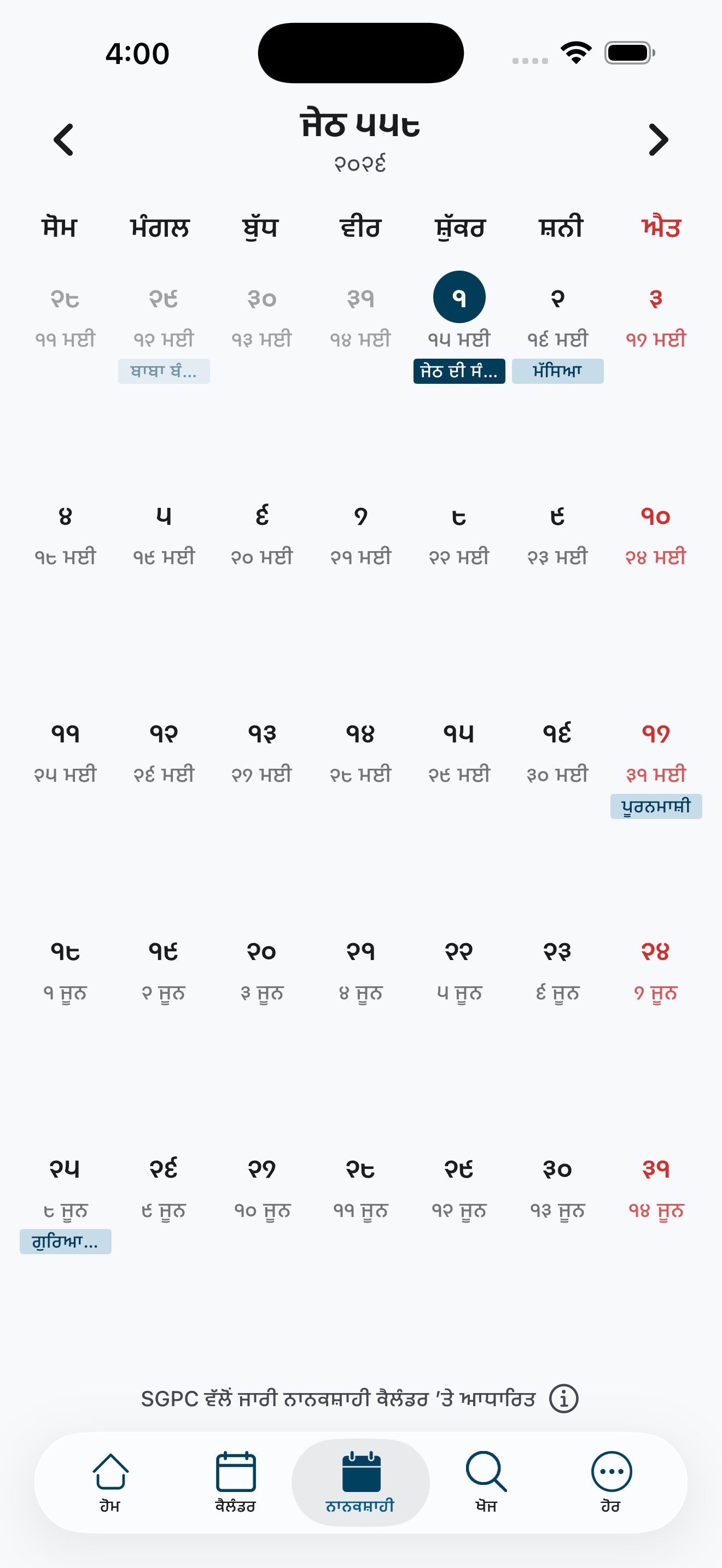
A dedicated utility designed for precise timekeeping and calendar tracking entirely in the native Gurmukhi script.
Frequently Asked Questions
Quick, structural insights regarding the linguistic mechanics of the script.
Is Gurmukhi a language?
No. Gurmukhi is a script or writing system, not a language. It is the visual alphabet used to write down spoken languages.
What language uses Gurmukhi?
It is primarily used to write the Punjabi language. It serves as the official script for Punjabi in Punjab, India, and is used globally by the Punjabi diaspora.
Is Punjabi always written in Gurmukhi?
Not always. In East Punjab (India), it is written in Gurmukhi. In West Punjab (Pakistan), Punjabi is written using Shahmukhi, a script based on the Perso-Arabic alphabet.
How many letters are there in the Gurmukhi script?
The traditional alphabet consists of 35 core letters (hence its historical name, 'ਪੈਂਤੀ ਅੱਖਰੀ' or 'The 35 Letters'). Six additional letters with a dot at the base (bindi) were added later to accommodate sounds from other languages, bringing the modern count to 41.
Does Unicode completely support Gurmukhi?
Yes. Unicode fully supports Gurmukhi in the block range U+0A00 to U+0A7F. This ensures that every modern digital screen can render Gurmukhi fonts beautifully and natively.
Can I type Gurmukhi on my phone and smartwatch?
Absolutely. iOS, Android, watchOS, and Wear OS all feature native keyboard support or font rendering for Gurmukhi. Our tools, like the Samaa (ਸਮਾਂ) app, utilize this native infrastructure directly.
Continue learning
Explore related topics to build a deeper understanding of Gurmukhi.
Explore The Gurmukhi Project
Discover apps, watch faces, and digital tools built to make Gurmukhi more accessible across modern devices.