Guide
Gurmukhi Alphabet
Learn the structural grid system behind the letters, sub-dot modifications, and native decimal numerals of the traditional Punjabi script.
Quick Facts
A quick introduction before exploring the guide.
Consonants (Vowel Carriers Included)
35 Core
Modified Consonants
6 Pair-Bindi
Dependent Vowels
10 Laga Matran
Native Numerals
Base-10 System
New to the Gurmukhi script? Before diving into the technical mechanics of the alphabet below, you might want to explore our introductory guide, What is Gurmukhi? →, to learn about its rich history, origin, and cultural significance.
The Phonetic Matrix
Unlike Western alphabets, Gurmukhi letters are not randomized. They are structured systematically into rows (vargs) matching their point of articulation—moving from the back of the throat forward to the lips.
Anatomy of a Glyph
Gurmukhi is a highly geometric script. Its structural design follows distinct architectural rules that make it clean, proportional, and highly scannable for both reader and font renderer alike.
A single continuous stroke across the top line completely redefines the character profile.
The Shirorekha (Top Hanging Line)
Nearly all Gurmukhi letters hang from a continuous top horizontal line called the Shirorekha. When writing words, this line is drawn unbroken across the letters, grouping them into a single visual unit.
The Open Top Rule (Distinguishing Sounds)
A tiny gap in the top line can completely alter a character's sound. For example, leaving the top open transforms 'Pappa' (ਪ) into 'Dhadda' (ਧ), or 'Mamma' (ਮ) into 'Sassa' (ਸ). Precise stroke tracking is critical.
The Sub-Dot Mutation (Pair Bindi)
By stamping a small dot (bindi) beneath the foot stem of six specific native consonants, the script effortlessly expands its phonetic vocabulary to capture foreign loan sounds without altering the base alphabet template.
Vertical Stem Anchors
Many characters anchor themselves on a strong right-hand vertical stroke. This stem serves as the physical structural root where post-fixed vowel markers like the Kanna (ਾ) cleanly snap into place.
The Core Alphabet (ਪੈਂਤੀ ਅੱਖਰੀ)
The foundational 35 letters are organized systematically into 7 precise structural rows based on their linguistic point of articulation.
ਮੁੱਖ ਵਰਗ / Mukh Varg (Primary Row)
The unique opening row containing three specialized vowel carriers and two foundational consonants.
ਊੜਾ / Ura
Vowel Carrier for O/U sounds
ਐੜਾ / Aira
Vowel Carrier for A/Ae sounds
ਈੜੀ / Iri
Vowel Carrier for I/Ee sounds
ਸੱਸਾ / Sassa
Consonant ('S')
ਹਾਹਾ / Haha
Consonant ('H')
ਕਵਰਗ / Kavarg (Guttural Row)
Produced deep within the vocal tract, at the back of the throat (velar articulation).
ਕੱਕਾ / Kakka
Consonant ('K')
ਖੱਖਾ / Khakha
Consonant ('Kh')
ਗੱਗਾ / Gagga
Consonant ('G')
ਘੱਘਾ / Ghagha
Consonant ('Gh')
ਙੰਙਾ / Nganga
Consonant ('Ng')
ਚਵਰਗ / Chavarg (Palatal Row)
Articulated by raising the flat of the tongue against the hard roof of the mouth.
ਚੱਚਾ / Chacha
Consonant ('Ch')
ਛੱਛਾ / Chhachha
Consonant ('Chh')
ਜੱਜਾ / Jajja
Consonant ('J')
ਝੱਝਾ / Jhajha
Consonant ('Jh')
ਞੰਞਾ / Nyanya
Consonant ('Ny')
ਟਵਰਗ / Tavarig (Retroflex Row)
Pronounced by curling the tip of the tongue back against the hard palate.
ਟੈਂਕਾ / Tainka
Consonant ('T')
ਠੱਠਾ / Thatha
Consonant ('Th')
ਡੱਡਾ / Dadda
Consonant ('D')
ਢੱਢਾ / Dhadha
Consonant ('Dh')
ਣਾਣਾ / Nana
Consonant ('N')
ਤਵਰਗ / Tavarg (Dental Row)
Articulated with the tip of the tongue touching the upper front teeth.
ਤੱਤਾ / Tatta
Consonant ('T')
ਥੱਥਾ / Thatha
Consonant ('Th')
ਦੱਦਾ / Dadda
Consonant ('D')
ਧੱਧਾ / Dhadha
Consonant ('Dh')
ਨੱਨਾ / Nanna
Consonant ('N')
ਪਵਰਗ / Pavarg (Labial Row)
Formed naturally through the interaction and closing of the lips.
ਪੱਪਾ / Pappa
Consonant ('P')
ਫੱਫਾ / Phapha
Consonant ('Ph')
ਬੱਬਾ / Babba
Consonant ('B')
ਭੱਭਾ / Bhabha
Consonant ('Bh')
ਮੰਮਾ / Mamma
Consonant ('M')
ਅੰਤਿਮ ਵਰਗ / Antim Varg (Final Row)
The closing row composed of liquids, semi-vowels, and continuous fricatives.
ਯੱਯਾ / Yayya
Consonant ('Y')
ਰਾਰਾ / Rara
Consonant ('R')
ਲੱਲਾ / Lalla
Consonant ('L')
ਵਾਵਾ / Vava
Consonant ('V')
ੜਾੜਾ / Rhara
Consonant ('Rh')
Vowels (ਲਗਾਂ ਮਾਤਰਾਂ)
Gurmukhi utilizes 10 distinct vowel forms. While an inherent short 'a' sound accompanies every consonant naturally, these specialized diacritics override and alter the phonetic output.
ਮੁਕਤਾ / Mukta
Inherent short 'a'
Example: ਘਰ
ਕੰਨਾ / Kanna
aa (as in car)
Example: ਕਾਰ
ਸਿਹਾਰੀ / Sihari
i (as in pin)
Example: ਦਿਨ
ਬਿਹਾਰੀ / Bihari
ee (as in see)
Example: ਤੀਰ
ਔਂਕੜ / Aunkar
u (as in put)
Example: ਪੁਲ
ਦੁਲੈਂਕੜ / Dulankar
oo (as in cool)
Example: ਸੂਰਜ
ਲਾਂਵ / Lavan
e (as in play)
Example: ਮੇਜ਼
ਦੁਲਾਵਾਂ / Dulavan
ae (as in cat)
Example: ਪੈਰ
ਹੋੜਾ / Hora
o (as in go)
Example: ਮੋਰ
ਕਨੌੜਾ / Kanaura
au (as in saw)
Example: ਕੌੜਾ
Special Symbols (ਲਗਾਖਰ)
Gurmukhi utilizes three auxiliary diacritics to control nasal sound properties and consonant emphasis across words.
ਬਿੰਦੀ / Bindi
Nasalization accent
Used with long vowels (like Kanna, Bihari, Lavan) to produce a clean nasal sound.
ਟਿੱਪੀ / Tippi
Nasal consonant doubler
Used primarily with short vowels (like Mukta, Sihari, Aunkar) to add an implicit 'n' or 'm' sound.
ਅੱਧਕ / Addhak
Geminate / Glottal stress accent
Placed above the line to double the phonetic force of the consonant immediately following it.
Modified Letters (ਪੈਰ ਬਿੰਦੀ)
Six specialized additional letters featuring a sub-dot mechanism to capture loan vocabularies with strict phonetic tracking.
ਸੱਸੇ ਪੈਰ ਬਿੰਦੀ / Sasse Pair Bindi
Modified ('Sh' sound)
ਖੱਖੇ ਪੈਰ ਬਿੰਦੀ / Khakhay Pair Bindi
Modified ('Kh' sound)
ਗੱਗੇ ਪੈਰ ਬਿੰਦੀ / Gaggay Pair Bindi
Modified ('Gh' sound)
ਜੱਜੇ ਪੈਰ ਬਿੰਦੀ / Jajjay Pair Bindi
Modified ('Z' sound)
ਫੱਫੇ ਪੈਰ ਬਿੰਦੀ / Faffay Pair Bindi
Modified ('F' sound)
ਲੱਲੇ ਪੈਰ ਬਿੰਦੀ / Lallay Pair Bindi
Modified ('Flapped L')
Sub-joined Letters (ਪੈਰ ਵਿਚ ਅੱਖਰ)
Gurmukhi implements secondary conjunct variations written explicitly beneath base letters to alter structural breath articulation and form consonant clusters.
ਪੈਰ ਵਿਚ ਹਾਹਾ / Pair ch Haha
Adds breath / aspirated tone
Example: ਪੜ੍ਹਨਾ
ਪੈਰ ਵਿਚ ਰਾਰਾ / Pair ch Rara
Blended 'r' consonant cluster
Example: ਪ੍ਰਕਾਸ਼
ਪੈਰ ਵਿਚ ਵਾਵਾ / Pair ch Vava
Blended 'v/w' sound (rare)
Example: ਸ੍ਵੈਮਾਣ
Word Construction Lab
See how base letters, diacritics, and sub-joined clusters lock together into single phonetic words.
Kitāb (Book)
Component Stack Breakdown
Typographic Note: Notice how the Sihari (ਿ) is written before the letter 'K' but pronounced after it. This relative positioning is a key rule when building theme-aware font layout software.
Prakāsh (Light)
Component Stack Breakdown
Typographic Note: This builds a classic cluster. The Pair Rara slips under the structural stem of 'P' to create the blended 'Pra' sound, while the Pair Bindi changes 'Sassa' into a soft palatal 'Sha'.
Sapp (Snake)
Component Stack Breakdown
Typographic Note: The Addhak sits directly above the line between letters. It signals to the speaker to double the force of the upcoming consonant, changing the sound from 'Sap' to a sharp 'Sapp'.
Gurmukhi in Digital World
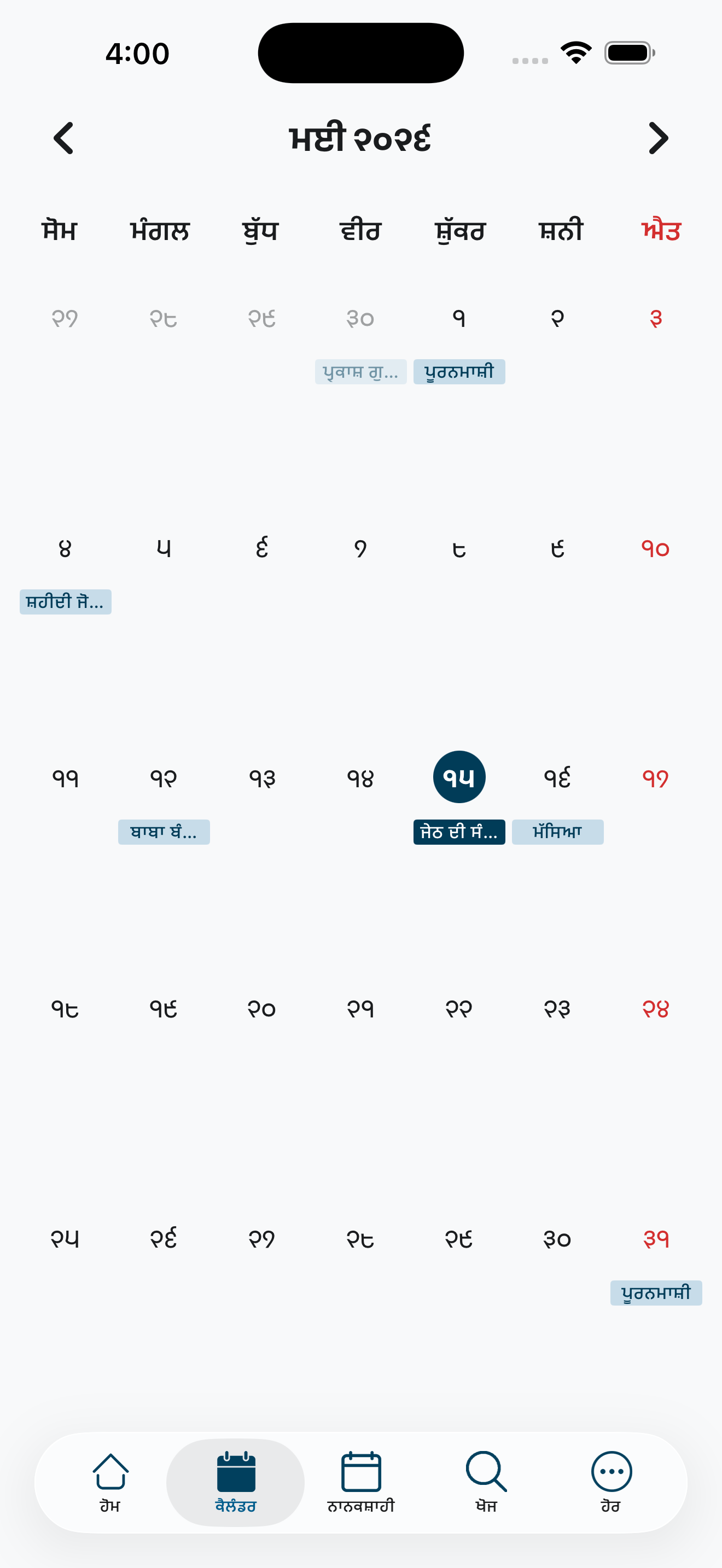
The Gurmukhi script is no longer limited to print and historical manuscripts. It has seamlessly adapted to modern digital typography, appearing natively with balanced glyph layout designs across smartphones, watches, and application layers.
Explore Our Gurmukhi Apps
A dedicated utility designed for precise timekeeping and calendar tracking entirely in the native Gurmukhi script.
Frequently Asked Questions
Deep-dive details regarding Unicode positioning, diacritic ordering rules, and font rendering exceptions.
What is the correct Unicode storage order for consonants and diacritics?
Gurmukhi follows logical phonetic entry rather than visual layout order. Always store the base consonant first, followed by the sub-joined letter (if any), then the dependent vowel sign (Laga Matra), and finally the auxiliary symbol (Lagakhar).
Why are some vowels written to the left if they are pronounced after the consonant?
The Siari (ਿ) vowel is visually rendered to the left of its host consonant character for traditional orthographic spacing. However, font shaping engines automatically handle this layout repositioning based on standard GPOS OpenType lookup tables.
How do OpenType fonts distinguish between open and closed top lines automatically?
Glyphs like ਪ (Pa) and ਧ (Dha) possess entirely separate code points in the Unicode block. OpenType fonts don't toggle lines dynamically; they rely on standard glyph substitutions mapping distinct vector inputs designed explicitly by the typographer.
Can auxiliary symbols like Bindi and Tippi be used interchangeably?
No. While both indicate nasalization, their usage is strictly dictated by the companion vowel. Tippi (ਂ) is paired exclusively with short vowels (Mukta, Sihari, Bihari wrapper instances) while Bindi (ਂ) overrides longer vowel structures.
Gurmukhi Numerals
The script features its own authentic base-10 numerical symbols (੦-੯) that operate precisely alongside decimal mathematics. They form the design core for the typography variants inside our timekeeping applications.
Explore The Gurmukhi Project
Discover apps, watch faces, and digital tools built to make Gurmukhi more accessible across modern devices.