Based on SGPC's Official Calendar
Nanakshahi Calendar
The SGPC Nanakshahi Calendar, built to keep you connected with accurate dates for all Gurpurabs, Sangrand, and historic Sikh events throughout the year.
ਚੇਤ ੫੫੪
੨੦੨੨
Looking for a specific event?
Explore every Gurpurab, Sangrand, historical event, and lunar phase in a dedicated year-wide directory with easy category filters.
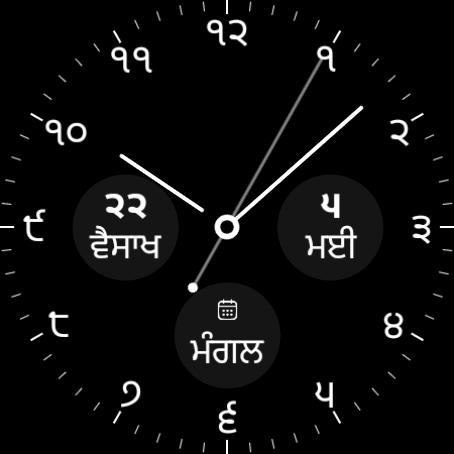
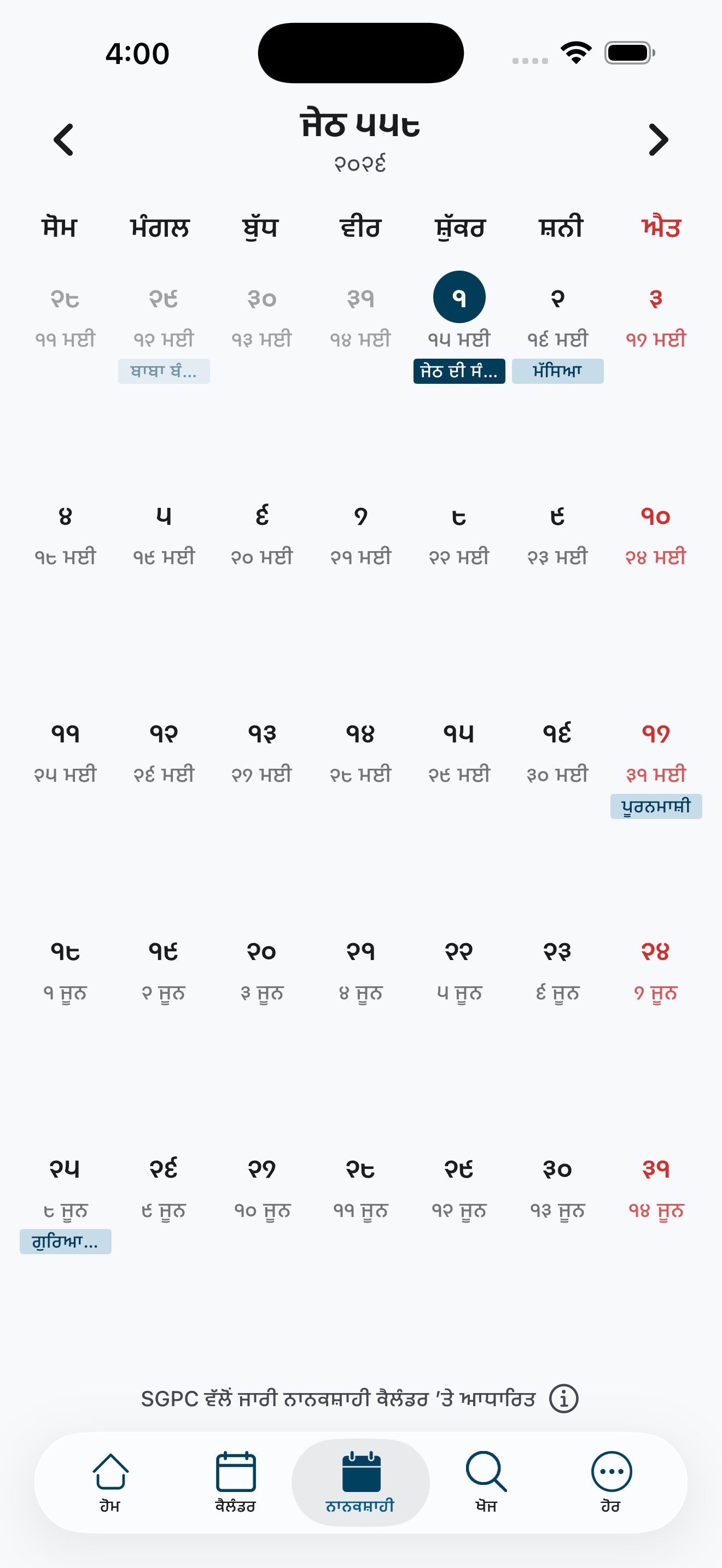
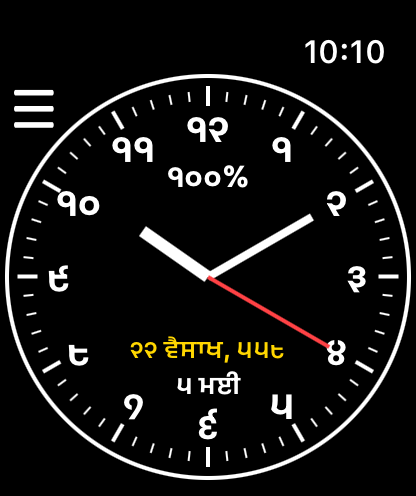
Tradition on Your Wrist & Home Screen
Take the Nanakshahi Calendar with you everywhere. Our companion app integrates seamlessly across your devices, transforming standard system layouts into beautifully localized interfaces with live Gurmukhi typography.
Featured Integration App
An everyday utility tool engineered for precise time calculations, real-time Sangrand shifts, home screen widgets, and active Gurpurab notifications formatted beautifully in native ੦-੯ digits.


The 12 Months of the Punjabi Nanakshahi Calendar
Track the historical sequence of the traditional Punjabi months. Under the SGPC framework, these months follow astronomical solar cycles where specific month lengths and start dates align directly with real-time solar transitions each year.
Chet
Marks the beginning of the Nanakshahi New Year cycle.
1st Month
Vaisakh
Core harvest season month celebrating historical Khalsa foundations.
2nd Month
Jeth
Summer transitional cycle across the subcontinent.
3rd Month
Harh
Mid-summer solar cycle marking high-temperature atmospheric shifts.
4th Month
Sawan
Traditional monsoon period characterized by heavy seasonal rainfall.
5th Month
Bhadon
Late-summer humid phase transitioning into the autumn harvest.
6th Month
Asu
Equinox transition introducing milder autumn temperatures.
7th Month
Katik
Traditional mid-autumn period hosting prominent Gurpurab historical dates.
8th Month
Magghar
Early winter cooling phase across the regional landscape.
9th Month
Poh
Deep winter cycle marked by historical commemoration periods.
10th Month
Magh
Late-winter seasonal phase celebrating changing solar alignments.
11th Month
Phagun
Final seasonal bridge completing the annual Nanakshahi calendar year.
12th Month
Today's Nanakshahi Date & Punjabi Calendar Status
Looking for today's date in Gurmukhi? This live status block tracks active seasonal cycles according to the officially recognized SGPC system rules.
- Today's Nanakshahi Date
- Live in Grid
- Gurmukhi Month
- ੦-੯ Layouts
Calendar FAQs
Clear answers to simple questions people ask when exploring the Nanakshahi calendar and Punjabi tracking systems.
What is the Nanakshahi Calendar?
The Nanakshahi calendar is a solar calendar utilized in Sikhism to map historical dates, Sangrands (month transitions), and Gurpurabs. Its epoch tracks directly from the birth year of Guru Nanak Dev Ji in 1469 CE, making the year 2026 CE correspond to 557-558 Nanakshahi.
What is the difference between the SGPC variant and the Mool Nanakshahi calendar?
The original Mool Nanakshahi calendar enforces fixed solar month lengths that remain locked to static Gregorian dates (such as Chet always starting on March 14). The SGPC version aligns with traditional astronomical solar cycles. Because it maps the dynamic moment the sun crosses into new zodiac signs, both month durations and exact Sangrand start dates float fluidly from year to year.
When does the Punjabi and Nanakshahi New Year begin?
The new calendar year kicks off on the 1st of Chet. Because we follow the SGPC system, this transition shifts slightly based on solar coordinates but generally falls on or right around March 14, marking both a seasonal shift out of winter and a fresh spiritual cycle.
Why do Gurpurab dates move around on the Western calendar every year?
While solar-tracked milestones stay relatively stable, many traditional historical dates within the official SGPC calendar lean on lunar calculation systems to respect structural history. Because standard lunar years run about 11 days shorter than solar years, these matching dates drift across your standard Gregorian tracking calendars annually.
How can I find today's accurate Gurmukhi date or active month?
You can reference our live interactive system grid above to instantly verify today's active month details. For direct home-screen access, persistent widgets, and push alerts mapping upcoming Sangrand solar crossings, consider checking out our companion mobile app, Samaa.